Rethinking Women’s Healthcare: The Doctors Behind Aurelian Med Spa

Q: What do you think is missing from how the healthcare system treats women's preventative health, and how does Aurelian Med Spa try to fill that gap?
CD: The healthcare system operates in a very specific way: you have a problem; we diagnose and treat the problem. It isn't built for prevention. That's strike one.
As women, we require more medical care because of our reproductive health. We're high utilizers of the system, and yet we are more likely to walk away from a visit feeling dismissed and unheard. Strike two.
There's also far less research done on conditions unique to women. We were routinely excluded from clinical trials until 1993, when legislation finally required that women and minorities be included. That means decades of research never adequately captured the differences between men and women, and we're still catching up on how much we don't know about women's health.
What does that leave us with? Something like this: a woman having hot flashes at work that break her concentration and embarrass her in front of colleagues, who may quietly start seeing her as less competent for something entirely out of her control. Will the hot flashes kill her? No. But the social, financial, and emotional toll can seriously affect her quality of life.
We’re told to grin and bear it, that we’re complaining too much, that we’re being hysterical — a sentiment that, painfully, still gets echoed by female providers because of the culture we were all trained in.
Dr. Aaron and I built Aurelian Med Spa to actively ensure every that patient feels welcome, heard, and understood. We spend 30 to 90 minutes with each patient because the concierge model gives us the luxury of time — time to learn about new testing and treatment options, including alternative medicine, and time to fight insurance companies when they deny coverage for something we know a patient needs.
That same model is what lets us also offer aesthetic services like XERF, our radiofrequency structural skin-tightening treatment. We back everything we offer with real medical judgment — knowing what actually works and what's safest, not just what's trending. XERF has become our most popular treatment, and it's a good example of that approach in practice: stimulating your skin's own collagen and elastin, with little pain and no downtime.
Q: You've combined two very different things, a concierge doctor's office and a med spa, into one business. Why did that make sense to you, and how do the two sides work together?
CD: A lot of our patients work really hard to take care of their bodies. Combining the concierge practice with med spa services allows us to help patients match the inside with the outside. Since our practice focuses a lot on preventative care it only makes sense that we provide aesthetic services that proactively slow down aging on the outside as well. We’ve built a lot of trust with our patients. They can trust that we will only recommend procedures that are tailored to them and can achieve the most natural results. They also just enjoy having a one-stop shop. Surprisingly, it was a natural fit.
Q: What's a moment with a patient that reminded you why you left traditional medicine to help build Aurelian Med Spa?
CD: It's not one specific patient, it's all of them. I'm reminded every day why I made the switch, because I actually get to take the time to know my patients. And the lack of that time was the recurring theme that pushed me out of traditional practice in the first place.
A typical day there looked something like this: come in an hour early just to get through the charts so you can move as fast as possible during each visit. Every patient gets 30 minutes, and after processing and vitals, you're really left with 10 to 15 minutes. In that time, you have to get to know them, figure out what's going on, and land on a treatment plan. Even on a good day, there are no built-in breaks between patients, so you finish one visit and have to pivot immediately into the next. There's barely time to write notes, and insurance companies base treatment approval on those notes being done before you see the next patient. I did that 18 to 20 times a day. If I gave each patient an extra five minutes, I was already an hour behind by lunch. It was a never-ending rat race where I could never get ahead.
Now I can spend as long as a patient actually needs. I can space out appointments and give each one the consideration it deserves. Most of the time, I can reach a patient the same day they report a problem, so it gets addressed faster. I've gotten to know my patients better here than in any practice I've ever worked in.
Q: What advice would you give to young women who want to pursue their dream and start a business?
CD: There's no version of starting a business where every single piece is in place first — you learn a lot of what you're missing by actually being in it. If you really want a head-start: whatever field you choose, get a year or two under someone you respect, admire, and want to be like. Learn the ins and outs of their business top to bottom. Then take the leap. I truly believe there's room for everyone.
Q: Can you tell us how you manage your work life balance?
CD: You're going to have good days and bad days. Some days you'll feel like you're doing really well in your personal life and falling short at work, or the other way around. You don't always get to choose which. The real answer isn't some perfect system; it's learning to be kinder to yourself when one side isn't where you want it to be.
Q: What is one word of advice you can offer to young women who want to reach your level of success?
CD: Build something real for yourself. A practice, a business, a reputation. It takes longer than social media makes it look, but it’s always worth the effort. The women I admire most weren't the fastest. They were the ones who kept showing up long after the exciting part wore off.
Q: What was the last book you really got into?
CD: Daggermouth — it’s the perfect blend of post-apocalyptic and romance.
Q: Favorite City?
CD: New York will always have a special place in my heart, but aesthetically, Venice is my favorite — the gondolas, the history, everything about it is just beautiful.
Q: What’s your signature drink?
CD: The Penicillin — a specialty drink in New York that actually brought me and my husband together.
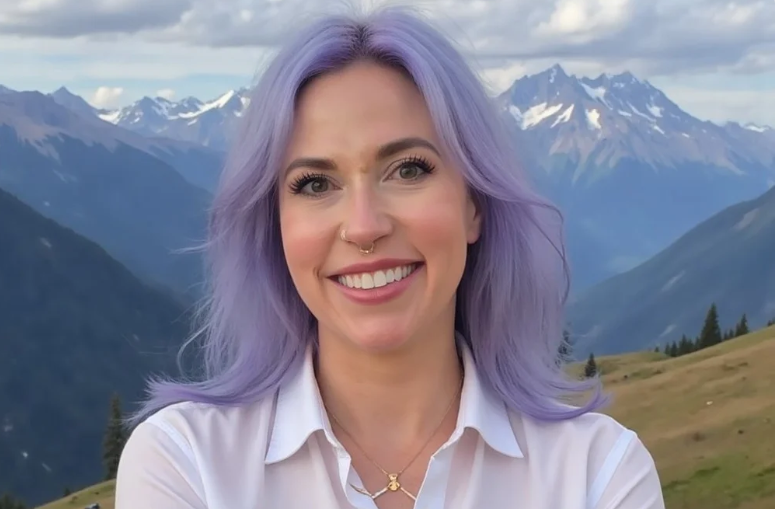
Q: Med spa treatments can feel intimidating or overwhelming for someone who's never tried one. How do you walk a first-time patient through deciding what's right for them?
EA: I always take the time to listen and troubleshoot before I recommend anything. A first-time patient usually isn't sure what they want. They just know something's bothering them, whether that's their skin texture, volume loss, or just feeling tired looking. We talk through goals, comfort level, and what a realistic, natural-looking result actually takes, and I'm upfront about what a single treatment can and can't do. This way they leave with, at the very least, a plan that they fully understand instead of just more uncertainty and a hard sell.
Q: If a patient walked into Aurelian feeling skeptical about "concierge medicine" being just for the wealthy, what would you want them to understand?
EA: I'd want her to understand that concierge medicine isn't about luxury, it's about access. What she's really paying for is time. A physician who isn't managing a fifteen-minute visit and a waiting room of forty other patients, but who actually knows her history, answers her questions, and is reachable when something feels off.
We spend so much on other things without thinking twice (skincare, clothing, etc.) but our health is the most important thing we have, and it's usually the last thing we invest in. "Concierge" carries a lot of baggage, but for us, it's really about going back to how medicine used to be practiced: when a problem comes up, your doctor should be able to address it the same day. That kind of attentive care used to be the norm in medicine. Instead of gatekeeping it, we're trying to make it feel achievable and even affordable again.
Q: What's your vision for where Aurelian goes next, and how do you want to redefine what a "med spa" experience feels like for women?
EA: Ideally, we'd love to have multiple locations around the Denver area, each able to offer more under one roof — think infusion centers, the med spa, maybe massage and acupuncture. That means bringing on more physicians, acupuncturists, massage therapists, and other multi-disciplinary specialists, so patients have real options to invest in.
But growth isn't really the redefinition I care about most. I want us to look at a patient head to toe, not just from the aesthetic side, but with a genuinely comprehensive view of overall wellness. I want Aurelian Med Spa to be a judgment-free zone. It shouldn't feel like an indulgence. It should just be part of how people take care of themselves.
Q: At the start of your career, what do you wish you had known?
EA: I wish someone had told me about the concierge model back in med school. It's good to get experience in a traditional practice first, but when I was starting out, it felt like there were only two options: join a corporate practice or work for someone else for the rest of your career. But you can build what you want, however you want it. There's no rulebook for how a business like this has to be run — if you can imagine it, you can make it happen.
Q: What advice would you give to young women who want to succeed in the workplace?
EA: Ask for what you want directly. Don't undervalue yourself. And if you can find a way to work for yourself, do it.
Q: What's your advice for women in male-dominated fields?
EA: We bring a different perspective to the table than what's typically expected in a male-dominated field. Use that. Think outside the box and let it make you more innovative within your own space.
Q: What’s your favorite thing to do in your free time?
EA: I love live music. jam bands especially, like String Cheese Incident, plus some EDM.
Q: Are you a morning person or a night owl?
EA: Believe it or not, I'm definitely a night owl.
Q: What’s your favorite international food?
EA: French cuisine is my absolute favorite — don't ask me to pick a dish.